Site Selection & Evaluation
 The choice of a site for your golf course can make or break a project. It is unfortunate that in many cases, the golf course property is already set without the advice of the golf course architect. The process of selection and evaluation of property as being suitable for a golf course is multifaceted and there will often be several options. Each option may have a different level of viability and appeal – both objective and subjective. Developers of new golf facilities are urged to closely examine the following items regarding the site before proceeding with a project:
- Site Selection & Evaluation Criteria
- Economic & Market Analysis
- Physical Features Evaluation
- Site Zoning, Permits & Approvals Required
- Off-Site Influences
The golf course architect, if engaged early enough, can play an important role in selecting the construction site or evaluating alternative sites. The architect can quickly assess whether a prospective site has the necessary character for a golf course or if it has critical issues that would make development as a golf course a problem. Such factors as steep terrain, poor soils, difficult access, zoning and approvals opposition, adverse off-site conditions, lack of adequate water supply and other items should be identified as early as possible to avoid choosing a site that cannot produce a quality golf course.
Also, environmental issues such as wetlands must be considered. The site must allow an environmentally responsible approach to the development of the new golf course. The source of water for irrigation, topography, overall site drainage and underlying soil condition are major considerations. The location of the site relative to population centers, accessibility, strong area demographics supporting golf and compatible surrounding land uses must be examined. An in-depth site analysis will usually involve a team of professionals such as the golf course architect, civil engineer, land planner, market analyst and legal counsel to provide accurate assessment of the most critical development factors.
Alternative Type Sites
Despite the usual desire to find spectacular sites for golf, there are more cases today where golf is being used for remediation of degraded sites. We are finding that golf can be a very useful tool to restore value to sites that have had environmental issues. Golf has been instrumental in the restoration of landfill sites, old mining operations, abandoned farms and other degraded properties. There are many examples of this type of restoration, including Chambers Bay in Tacoma, Washington, the venue for the 2015 US Open Championship and an abandoned mining operation.
Typical Site Criteria
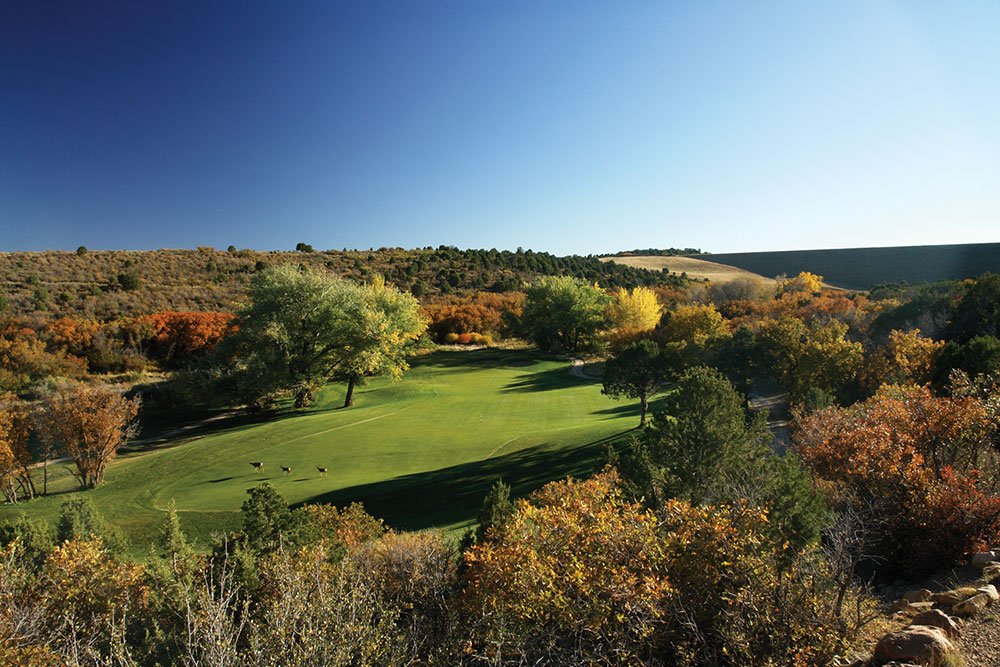
A standard 18-hole golf course requires about 175 acres of usable land in order to have space for safe golf corridors. This area can increase if the site is very open and subject to high wind speeds and can decrease if the course is well contained by topography or trees. Flat is better than too steep, but gently rolling is best. Sites with underlying rock strata or other poor soil conditions can be very expensive to construct. Open fields without too many trees are preferred to reduce clearing costs. The land configuration should not be too irregular with a lot of sharp angles that create difficult spaces for golf routing. Adequate golf play corridors must be provided for safety reasons and to allow for a good relationship between golf and adjacent uses. Having surface waters such as flowing streams or large ponds is a distinct advantage, both for aesthetic and strategic reasons and to provide a reliable source of irrigation water.
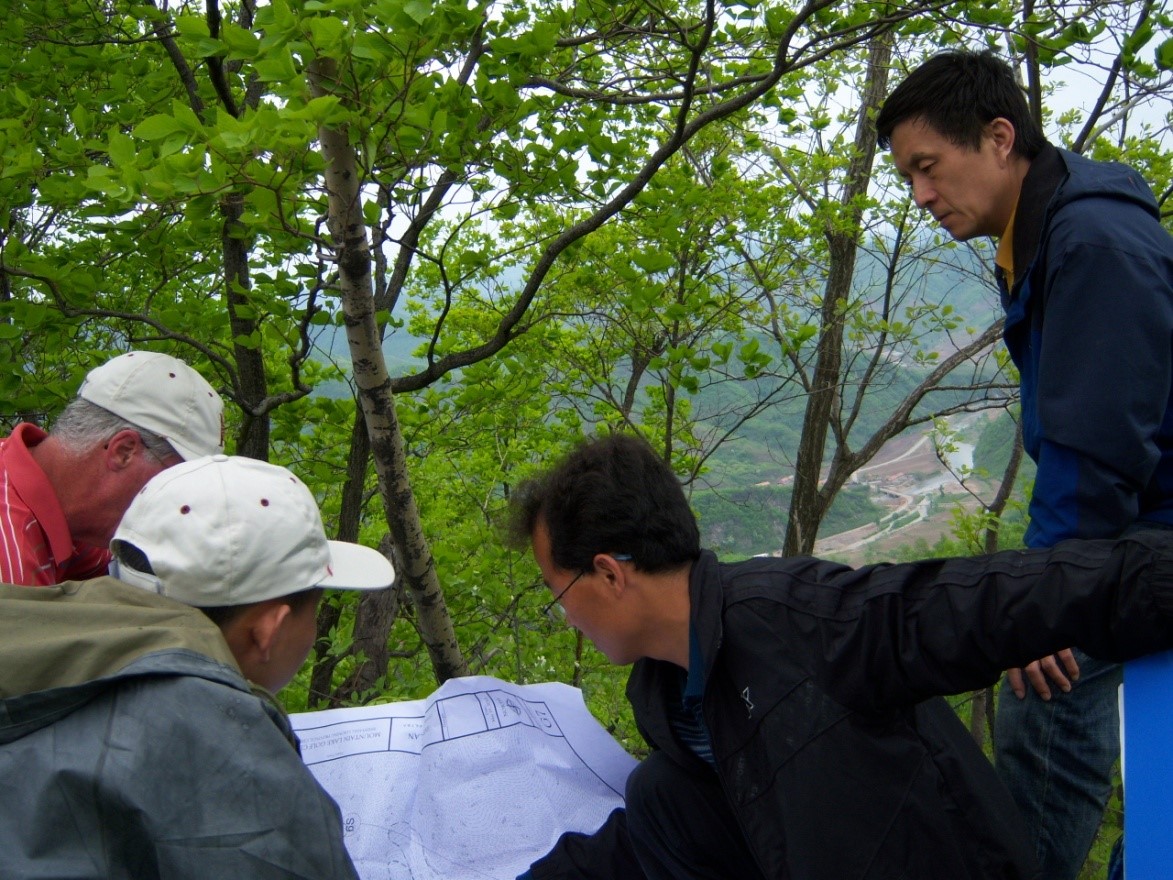
On-site review with project team
Generally, a 20-acre contiguous piece of land is needed for the clubhouse site, 1st and 10th tees, 9th and 18th greens and the practice range. The site should allow for orientation away from the sun when starting, finishing and practicing. Typically, architects and developers strive for a nice panoramic view from the clubhouse. Sites that allow for returning nines are best for operational efficiency. Outstanding natural site features separate a great site from a good one. Simply put, the more and the bigger, the better.
Factors such as location relative to new growth nearby, markets that are under-served by existing golf or where there is demand for a specific niche in the market that has not been filled can all be candidates for good golf sites. Care should be taken by new course developers to do at least preliminary research on what issues may be associated with a site regarding the ability to obtain all of the permits, approvals and zoning that is necessary to construct a new course. It is good to know if a site has too many wetlands that may be impacted or neighbors who are opposed to new development in their area before proceeding too far. All sites possess their own positive and negative characteristics. Site analysis by a golf course architect will lead to the selection of a site best suited for quality golf.